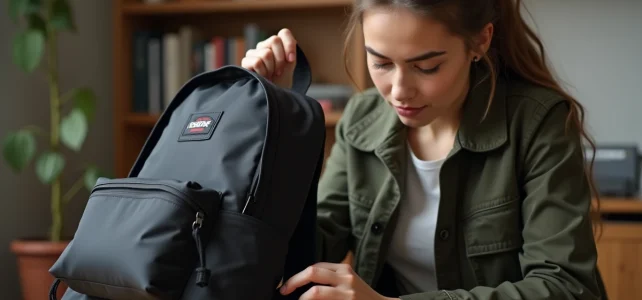
Eastpak no longer promises a “lifetime guarantee” in the literal sense. The brand now communicates a limited warranty of up to 30 years depending on the product, a more defined formulation than the previous marketing promise. Understanding what this warranty actually covers, its exclusions, and the claims process helps avoid disappointments when a bag shows its first signs of weakness.
From lifetime warranty to limited warranty: what has changed at Eastpak
For years, the slogan “Built to Resist” was accompanied by a lifetime warranty widely promoted by retailers. The message was simple: an Eastpak bag lasts a lifetime, and if it breaks, the brand repairs or replaces it.
Recommended read : Everything You Need to Know About High-Performance and Secure Web Hosting for Your Website
The official communication has evolved. On its European website, Eastpak now displays “up to 30 years of limited warranty.” This semantic shift is not trivial: the maximum duration varies according to the product range, and the word “limited” explicitly excludes certain types of damage.
Several blogs and comparison sites continue to talk about lifetime warranty of Eastpak bags without mentioning this nuance. Before counting on a free repair, it’s better to read the terms as they exist today.
Read also : Everything You Need to Know About John Nettles' Private Life: Height, Weight, and Wife
Defects covered and exclusions of the Eastpak warranty
The Eastpak warranty covers manufacturing defects: seams that come apart for no reason, faulty zippers within the first few months, fabric that tears at a tension point meant to withstand stress. In summary, anything that falls under a production flaw is included.
What is not covered deserves equal attention. Three categories of damage are systematically excluded:
- Normal wear and tear from daily use (fading fabric, straps that soften, slightly deformed bag bottom after several years)
- Accidental or intentional damage (tear caused by a sharp object, burn, permanent stain, damage due to improper storage)
- Modifications made to the product (custom stitching, addition of heat-sealed patches that altered the fabric, replacement of the zipper by a third-party repairer)
The distinction between manufacturing defects and normal wear remains the main point of contention. Eastpak reserves the final judgment, and a bag deemed “normally worn” will be returned without repair.
Standard products and limited editions: different coverage
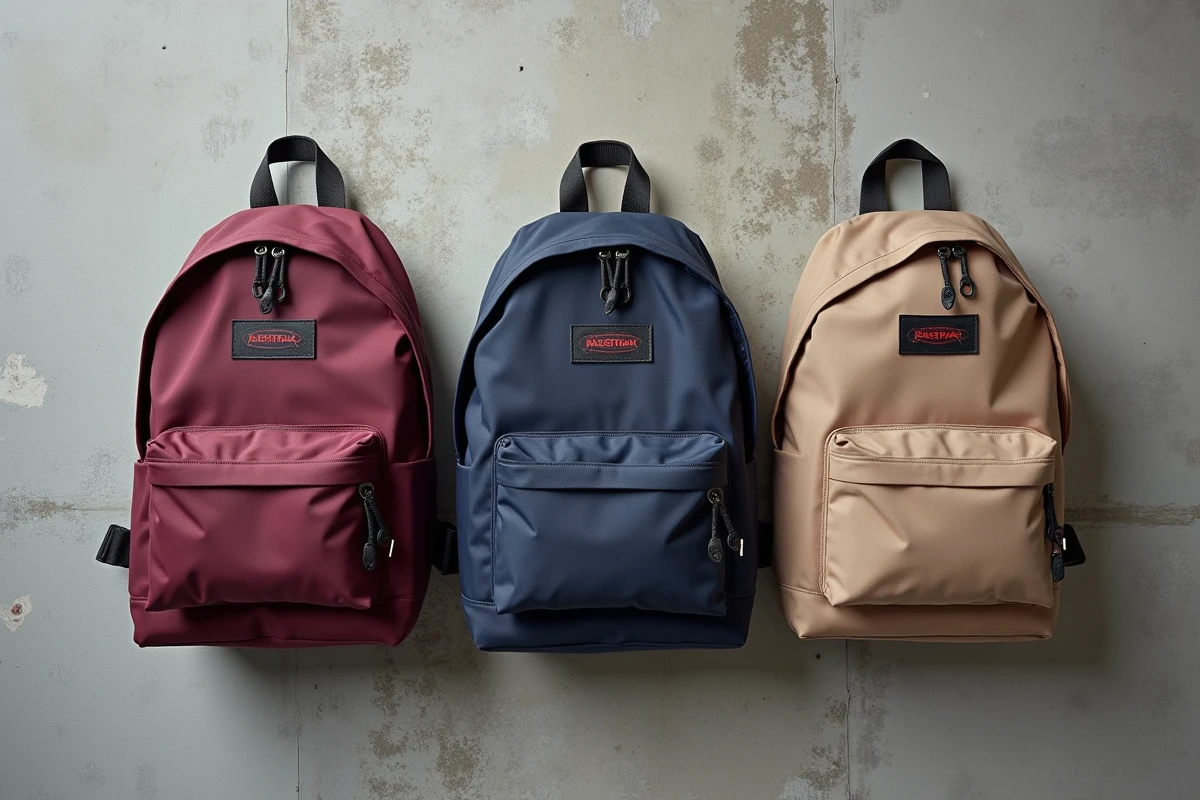
Not all Eastpak bags have the same warranty duration. Models from the permanent range (Padded Pak’r, Orbit, Provider) enjoy maximum coverage. Capsule collections, collaborations, and certain accessories may be covered for a shorter duration.
This hierarchy is not always clearly apparent at the time of purchase. Checking the product sheet or the notice attached to the bag remains the only reliable way to know the applicable duration.
Claims procedure and repair center in Germany
The claim request is made online, on the official Eastpak website. You need to provide proof of purchase (receipt or order confirmation) and photos of the damage. If the claim is accepted, Eastpak sends a prepaid return label.
The bag is then shipped to the VF Warranty Repair center in Dresden, Germany. This European centralization means that all French customers send their bags across the Rhine, regardless of their place of residence.
In terms of timing, the repair alone takes between one and two weeks depending on the workload of the center. You must also add the round-trip shipping time, which brings the overall delay to several weeks in most cases.
The ecological paradox of centralized repair
Eastpak highlights the durability of its products as an environmental argument. Repairing rather than throwing away fits into a virtuous logic. The systematic sending of a bag to Germany from France (and its return) generates a carbon footprint that nuances this argument.
For a minor defect, such as a stuck zipper, using a local tailor often costs less in time and impact than the official procedure. The downside: any external intervention may void the remaining warranty.
Eastpak warranty and proof of purchase: problematic cases
Without proof of purchase, the claim is generally denied. A bag received as a gift, bought second-hand, or whose receipt has been lost poses a concrete problem.
Some users report having obtained coverage by providing a screenshot of an online order or a bank statement. These cases remain at the discretion of customer service and are not a rule.
For purchases in physical stores, photographing the receipt on the day of purchase avoids the classic situation of a thermal receipt becoming unreadable after a few months in a drawer.
Should you rely on the warranty when choosing an Eastpak bag?
The Eastpak warranty remains a real advantage compared to most mainstream luggage brands, which cap at two years of legal warranty. For a bag used daily for school or work, knowing that a manufacturing defect will be covered for years provides valuable security.
The trap would be to consider this warranty as comprehensive insurance. It does not cover wear and tear, accidents, or modifications. An Eastpak bag remains a textile product subject to the same physical constraints as any other. Its reputation for durability is based on the quality of materials and finishes, not on the promise of systematic replacement.