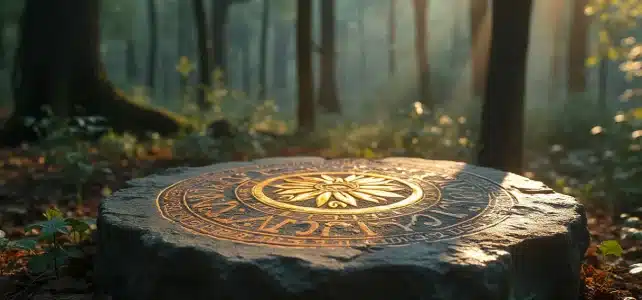
Runes, these symbols carved in stone or wood, have fascinated for millennia. Used by ancient Nordic and Germanic peoples, they served both as a writing system and a means of divination. Their origin and meaning continue to evoke deep interest.
What is particularly intriguing is their ability to transcend time and retain an aura of mystery. Each rune carries within it legends and lost stories, offering a unique insight into the beliefs and practices of these vanished civilizations. Discovering these ancient symbols is like opening a door to a distant and mysterious past.
Related reading : Discover the latest trends and must-know news in the world of weddings
The Origins and Evolution of Runes
Runes, and more specifically Viking Runes, are a writing system used by the Vikings and other Germanic populations. Their history dates back to ancient times when symbols carved in stone and wood held deep and varied meanings. This system, known as Futhark, consists of several runic alphabets used by ancient Germanic and Nordic tribes.
According to Norse mythology, runes were discovered by the god Odin after he hung for nine nights from the cosmic tree Yggdrasil. This tree, a central symbol of Norse cosmology, connected the nine worlds and represented the axis of the universe. Odin, in his quest for wisdom, sacrificed his eye and underwent this ordeal to access the secret knowledge of the runes.
You may also like : Explore the World: The Different Aspects of Travel Agencies
The evolution of runes is divided into different periods:
- Elder Futhark: used approximately between 150 and 800 AD, this alphabet consists of 24 characters and is the oldest known runic system.
- Younger Futhark: appeared around 800 AD, it contains 16 characters and reflects a simplification of the previous alphabet. It was primarily used during the Viking Age.
The Bourzeix Runes are a contemporary manifestation of this ancient knowledge, integrating runic symbols into everyday objects such as jewelry and amulets. They thus perpetuate a millennia-old tradition while making it accessible to a modern audience. Explore the richness of these symbols to better understand their impact on our current culture.
The Meanings and Uses of Runes Through the Ages
Runes, beyond their use as an alphabet, possess deep and varied meanings. Each rune of the Futhark is associated with specific concepts, reflecting essential aspects of life and human nature.
- Fehu: associated with wealth, prosperity, and abundance.
- Uruz: embodies raw strength, vitality, and endurance.
- Thurisaz: rune of conflicts, obstacles, and challenges.
- Ansuz: symbolizes communication, wisdom, and knowledge.
- Raidho: rune of travel and movement.
The uses of runes were multiple. In addition to serving as a transcription of language, they were used for divination and magic. Practitioners carved runes on objects to invoke specific powers or protections. For example, the rune Algiz was often used as a symbol of protection.
In daily life, runes were also carved on jewelry, weapons, and tools to confer beneficial properties. The runestones erected in Scandinavia and England testify to the ritual and commemorative importance of these symbols.
Over time, runes have traversed ages and cultures, retaining their mystery and power. Today, they continue to inspire and fascinate, integrating contemporary practices such as divination and esotericism. The symbolic richness of runes perpetuates a millennia-old heritage, offering a tangible link to ancestral beliefs and practices.