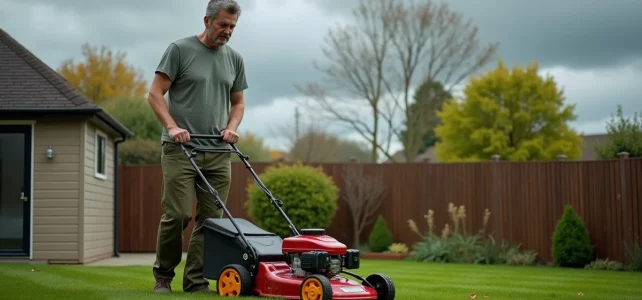
Mowing the lawn before or after the rain is one of those questions that every gardener asks at least once per season. The answer seems obvious, but it depends on parameters that are rarely considered: the type of moisture (dew, shower, prolonged rain), the actual height of the blades at the time of cutting, and the state of the soil beneath the visible surface.
Mowing Height and the One-Third Rule: The Key Factor Over Weather
The usual reflex is to look at the sky. If the weather is dry, we take out the mower. If rain is forecasted, we hesitate. This reasoning overlooks a more determining factor: the height of the grass at the time of mowing.
You may also like : Should you be concerned about your safety when traveling to Djerba right now?
The one-third rule states that you should never remove more than one-third of the total height of the blades in a single pass. After several days of rain, growth accelerates. Waiting for the grass to dry perfectly can mean that the grass has already exceeded the threshold where a typical cut amounts to scalping the lawn rather than maintaining it.
This phenomenon creates a trap: the gardener waits for nice weather, the grass grows, and then the mowing is too short. The lawn is then weakened, more susceptible to fungal diseases and summer drying. The question of when to mow the lawn after the rain deserves to be asked based on the actual growth of the grass, not just the apparent moisture level.
Related reading : Why Refurbished iPhones Are the New Trend to Embrace
If the grass has significantly grown during a rainy period, it is better to make a first pass by raising the mower’s cutting height, then come back a few days later at the desired height. This two-step approach preserves the root system.
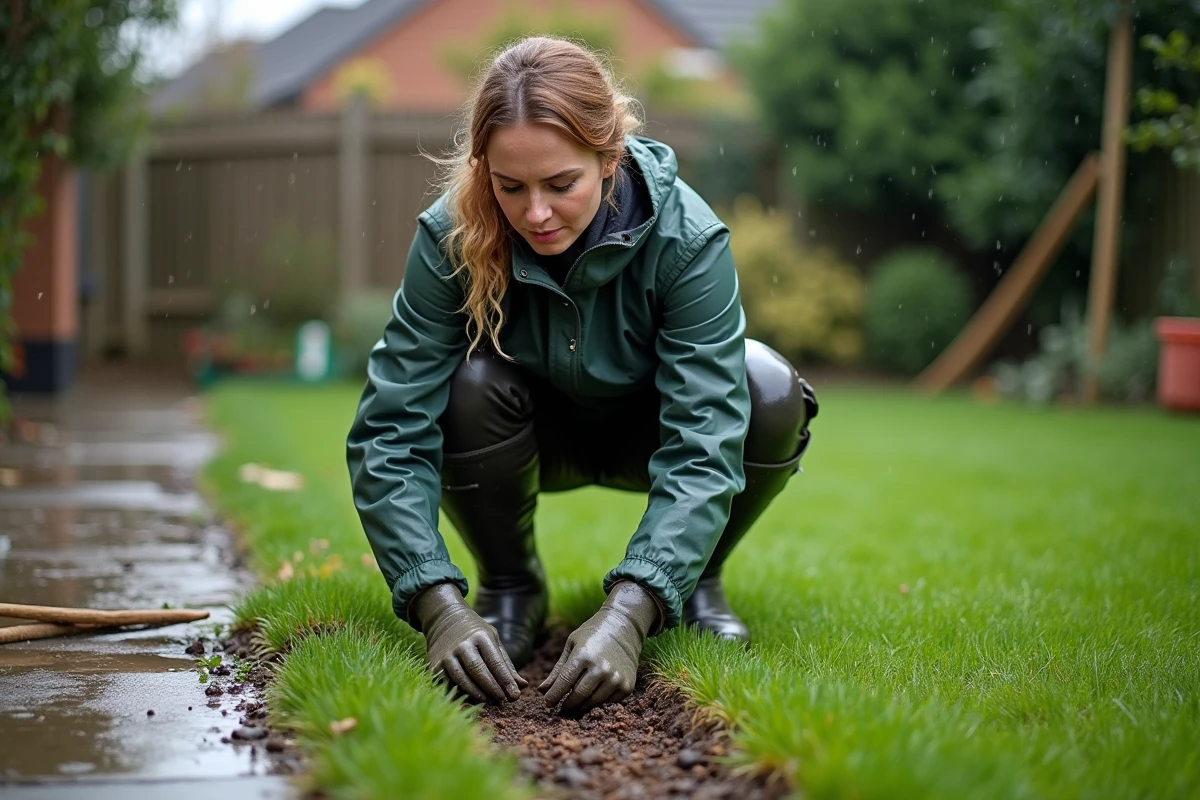
Morning Dew and Soaked Grass: Two Situations the Mower Handles Differently
A lawn covered with morning dew and a lawn saturated with water after three days of rain do not require the same precautions. Specialized sources make a clear distinction between these two levels of moisture.
Dew makes the blades slippery on the surface. The mower blades tend to flatten the grass rather than cut it cleanly. The result: an uneven cut, frayed blades that yellow quickly, and clumps of grass stuck under the deck.
A soaked soil poses an additional problem. The mower’s wheels sink, compact the soil, and damage the soil structure. On clayey ground, just a few passes are enough to create visible ruts for weeks. The grass that grows afterward on compacted soil develops a shallow root system, making it more vulnerable to the next drought.
The Least Risky Mowing Window After a Shower
Field reports converge on one point: the best window is late morning or late afternoon, once the dew or residual moisture has evaporated. Mowing early in the morning, even in generally dry weather, exposes you to the same problem of wet blades.
To assess whether the grass is ready, a simple test suffices: walk on the lawn. If your shoes stay dry and your footprints do not mark the ground, the conditions are right.
Mowing Before the Rain: What It Changes for the Soil and Mulching
The option of mowing just before a forecasted shower is rarely discussed. It has a concrete advantage related to mulching, a technique that involves leaving the mowing residues to decompose on-site rather than collecting them.
When you mow on dry grass and rain arrives in the following hours, the cut residues are pressed to the ground by the water and decompose faster. This natural mulch protects the soil from evaporation, nourishes soil microorganisms, and reduces the need for watering during hot periods.
However, this strategy only works if the cut is fine and even. Thick clumps of grass left on the surface before the rain risk forming a crust that suffocates the grass underneath. Three conditions must be met for mulching before rain to be beneficial:
- The grass must be at a reasonable height, allowing for a cut that respects the one-third rule without producing large clumps
- The mower must be equipped with well-sharpened blades, capable of finely chopping the blades rather than tearing them
- The expected rain must be moderate, not a heavy storm that could wash away the soil and carry the residues to the low areas of the terrain
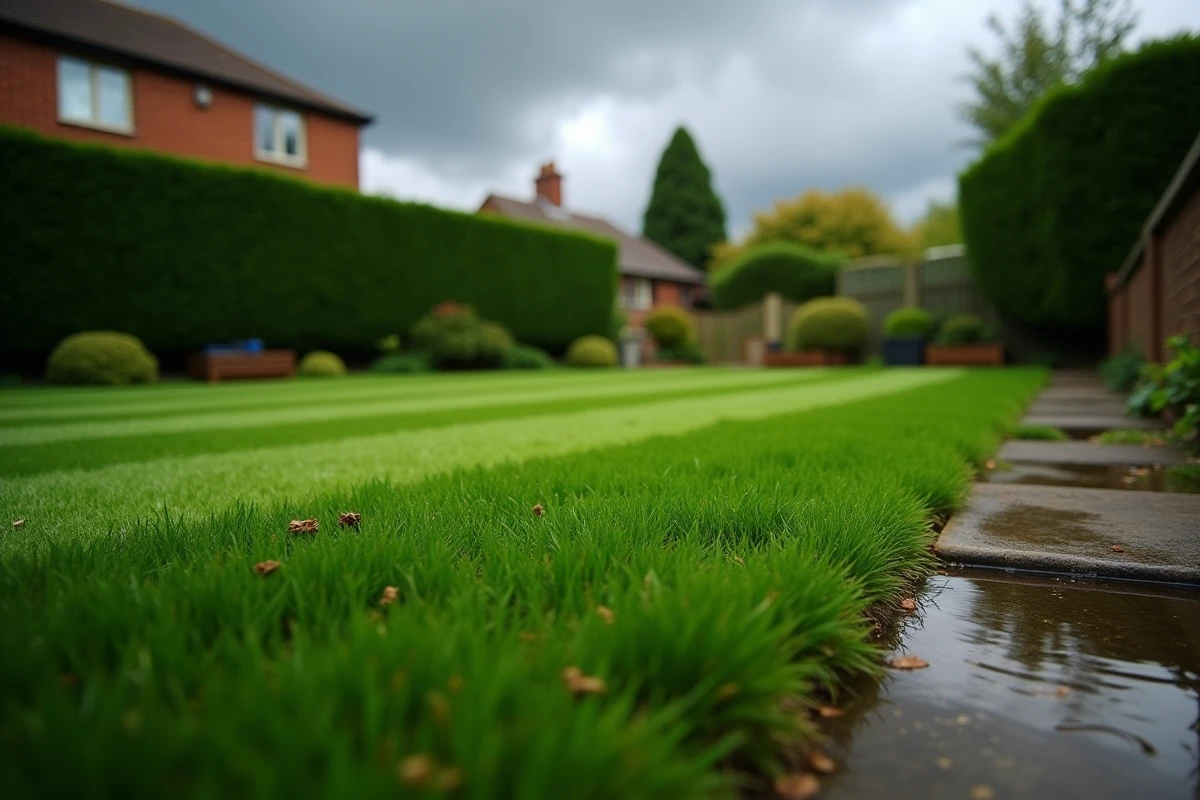
Mower Blades and Equipment Maintenance in Humid Conditions
The condition of the blades is a parameter often overlooked when discussing mowing and weather. Dull blades tear the grass instead of cutting it, and this problem worsens on wet grass. Wet blades offer less resistance, masking the fact that the cut is poor. You only realize it two days later when the tips turn white.
After any mowing in slightly humid conditions, cleaning the underside of the deck is not optional. Wet grass forms a compact layer that, when dried, hardens and reduces cutting efficiency during the next use. It also promotes corrosion on untreated steel blade models.
Regular maintenance of the blades, with sharpening at the beginning of the season and checking after each mowing period on wet grass, extends the mower’s lifespan and improves cut quality far beyond what the choice of weather window can provide alone.
Concrete Mistakes to Avoid Depending on the Season
In spring, growth is rapid and showers frequent. The temptation to mow at the first window of nice weather leads to cutting too short a lawn that has grown tall. The good practice: raise the cutting height a notch and come back a few days later.
In summer, the problem reverses. The soil may be dry on the surface but the grass still wet with dew early in the morning. Mowing before this moisture evaporates causes the same inconveniences as mowing after rain, with the added thermal stress on grass already stressed by heat.
In autumn, dead leaves mixed with wet grass create a combination that the mower handles poorly. Clearing the leaves before mowing, or using a suction function if the mower has one, prevents creating a suffocating layer that promotes fungal diseases before winter.
- Spring: prefer two spaced passes rather than a drastic cut after rain
- Summer: wait until late morning even in dry weather, to let the dew evaporate
- Autumn: remove dead leaves before each mowing to avoid matting of the grass
The choice between mowing before or after the rain rarely boils down to a categorical “yes” or “no.” The height of the grass, the state of the soil, the sharpness of the blades, and the season weigh more heavily in the balance than the mere presence of water on the blades. A well-cut lawn at the right time, even slightly damp, fares better than a lawn scalped too short after a long wait for nice weather.