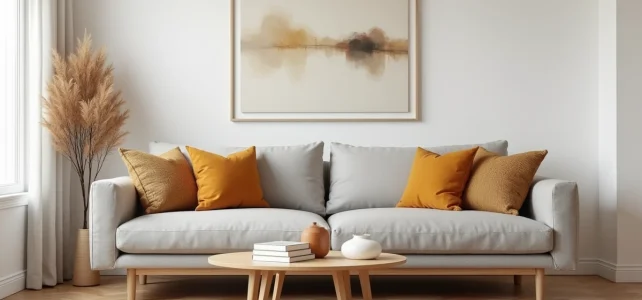
Your living room feels stagnant, your bedroom lacks character, and the bathroom hasn’t changed in years. Before rethinking everything, a room-by-room approach allows you to transform an interior without getting sidetracked. The goal is not to follow a catalog of trends, but to choose design choices suited to each use, each light, each constraint.
Decor and Mental Well-Being: Designing Each Room as a Restorative Space
Have you ever noticed that a living room cluttered with screens is more tiring than restful? For a few years now, interior decoration has incorporated an emotional regulation dimension. The principle is simple: each room serves a specific psychological function, and the choice of colors, materials, and lighting must adapt to it.
Read also : Trendy Ideas for Your Child's Next Haircut Appointment
In the living room, this translates into areas for digital disconnection. We favor tactile materials (thick linen, boucle wool, raw wood) over smooth and cold surfaces. The idea is not to banish the television, but to create at least one screen-free corner, oriented towards conversation or reading.
For the bedroom, the trend leans towards dark and enveloping palettes, high-performance blackout materials, and a reduction of visual stimuli. We declutter, simplify the walls, and limit objects on the nightstand. A bedroom designed for sleep avoids bright colors and direct lighting.
Related reading : The best alternatives to watch movies streaming for free
Browsing the decor ideas from Votre Déco, we find this logic of coherence between the visual ambiance and the actual use of each space.
The bathroom, on the other hand, borrows from the micro-spa codes: scenographic lighting (warm light in the evening, cooler in the morning), mineral materials, sometimes even integrated sound or scent diffusion. It is no longer a utilitarian space; it is a transition zone between two moments of the day.
Hybrid Zones in the Living Room and Bedroom: Setting Up Remote Work Without Sacrificing Decor
Remote work has permanently changed interior layouts. The living room is no longer just a relaxation space, and the bedroom sometimes accommodates a desk. The challenge: integrating these professional functions without turning your apartment into an open space.
The most effective solution remains foldable furniture. A wall-mounted drop-leaf desk in the living room disappears in the evening. In the bedroom, a video conferencing nook with a simple lightweight acoustic panel is enough to separate uses.
- In the living room, a wall secretary that closes allows you to hide professional materials at the end of the day and regain a clear living space.
- In the bedroom, a screen or a tall shelf creates a visual separation between the resting area and the work corner, without partitioning the room.
- In the dining room, dedicated storage for professional materials (cables, headset, documents) frees up the table for dinner.
Modular furniture resolves the conflict between professional life and decoration, provided you choose pieces whose style integrates with the rest of the room. An industrial black steel desk in a warm-toned living room creates an unnecessary break.
Materials and Colors by Room: Combinations That Really Work
Rather than listing trendy colors, let’s focus on what actually works, room by room.
Living Room: The Trio of Wood, Linen, and Muted Tones
The living room gains depth with natural and raw tones: terracotta, sage green, sandy beige. Pairing a natural linen sofa with a light wood piece creates a warm balance effortlessly. Avoid multiplying shiny materials (glass, polished metal, lacquered) that visually weigh down the space.
Bedroom: The Dark Palette and Dense Textiles
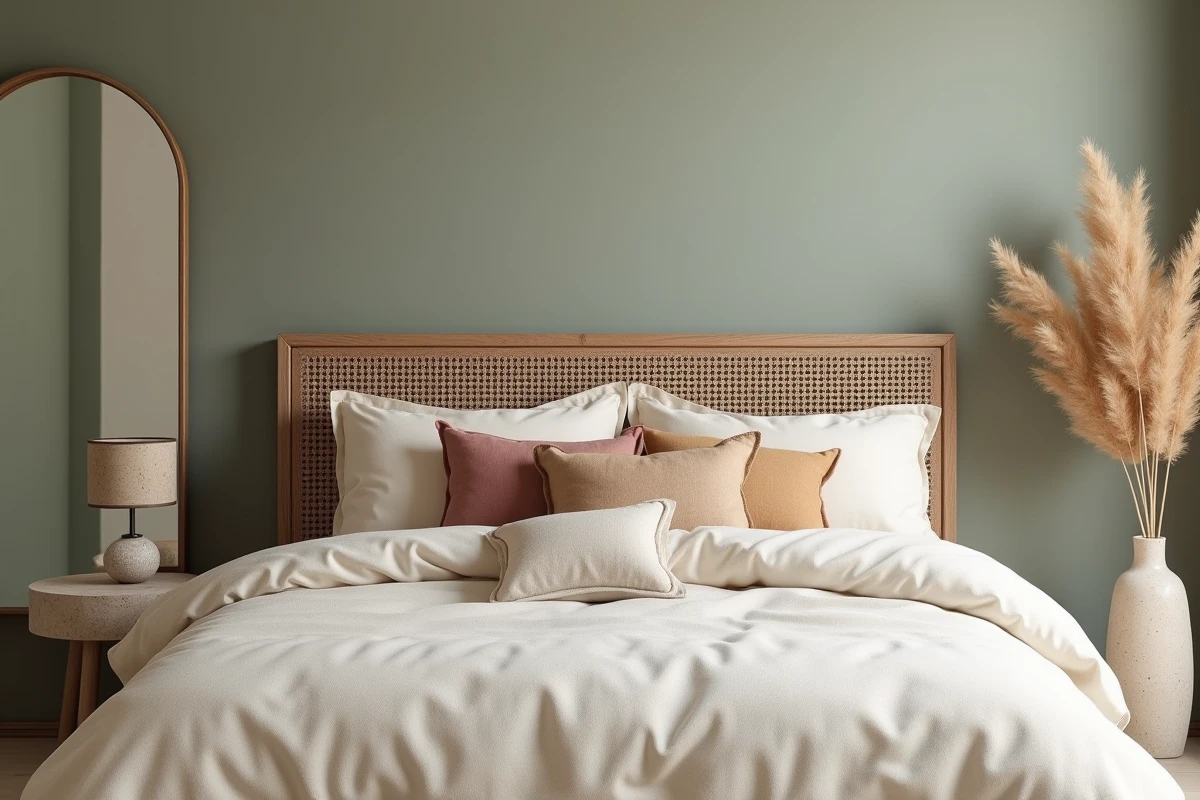
Navy blue, forest green, or anthracite gray work better in the bedroom than one might think. These colors envelop without darkening, provided you compensate with light bedding and thick textures (corduroy, waffle cotton).
Kitchen: The Matte Contrast and Visible Storage
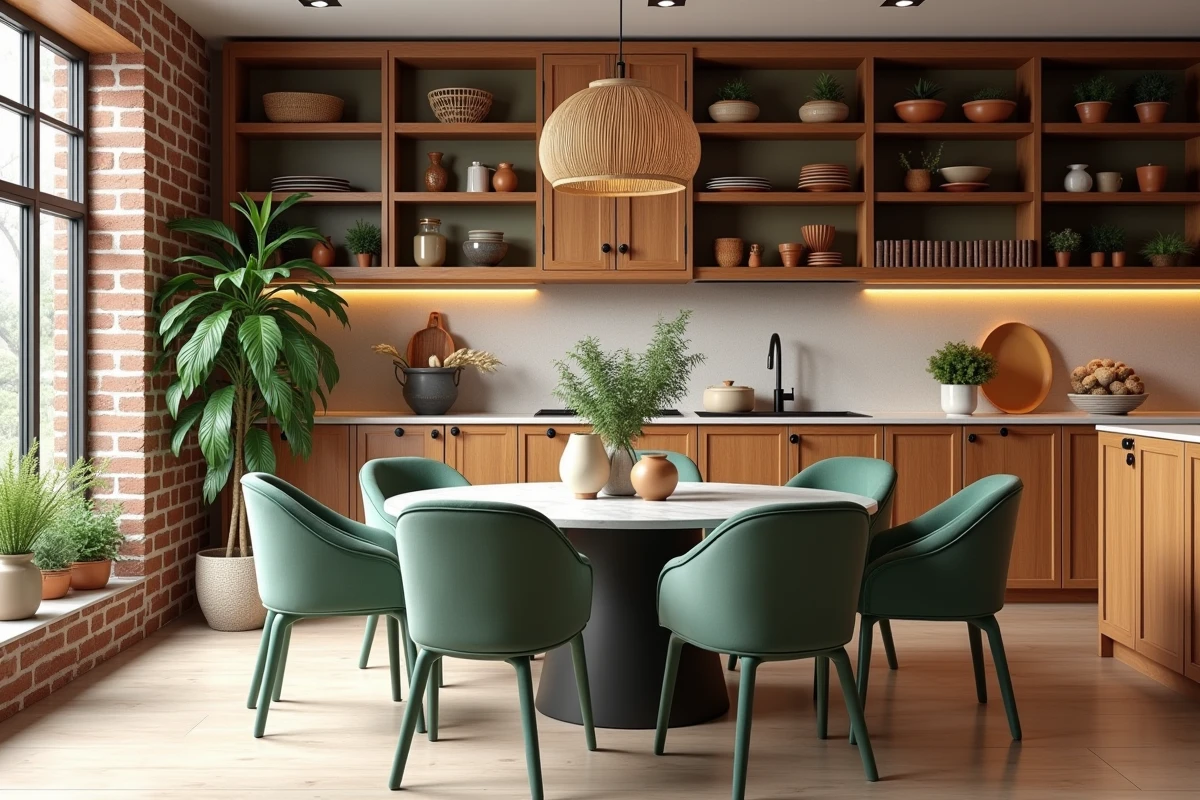
The contemporary kitchen plays on the contrast between matte facades (black, dark green, terracotta) and elements in wood or brushed metal. Open shelves replace high cabinets: they visually enlarge the room and allow for the display of dishes as decorative elements.
Common Mistakes in Interior Decoration: What Breaks the Harmony of a Project
Why do some interiors seem “fake” despite beautiful elements taken separately? The problem rarely lies with the furniture itself.
Mixing too many styles in one room creates a catalog effect. A Berber rug, a Scandinavian chair, and a baroque table can coexist, but not in a space smaller than twenty square meters. The smaller the room, the stricter the style coherence must be.
Lighting is another often overlooked point. A single ceiling light casts flat light that flattens the volumes. Multiplying light sources at different heights (floor lamp, wall sconce, table lamp) transforms the ambiance of a room more radically than a change in wall color.
- Limit furniture styles to two per room to maintain a clear visual reading.
- Plan for at least three light points per living space, at different heights.
- Test colors with samples painted directly on the wall, never just on a paper color chart, as the natural light in the room radically changes perception.
The last common pitfall concerns proportions. A large sofa in a small living room, a table too wide for the dining room: the design of a space relies as much on the dimensions of the furniture as on its aesthetics. Measure before buying, and leave circulation areas of at least sixty centimeters around the main furniture.
Rethinking your interior room by room, starting from actual use rather than the latest trend spotted online, remains the most reliable method for achieving a lasting result. A living room designed for relaxation, a bedroom thought out for sleeping, a kitchen organized for cooking: when function guides the decor, harmony follows naturally.