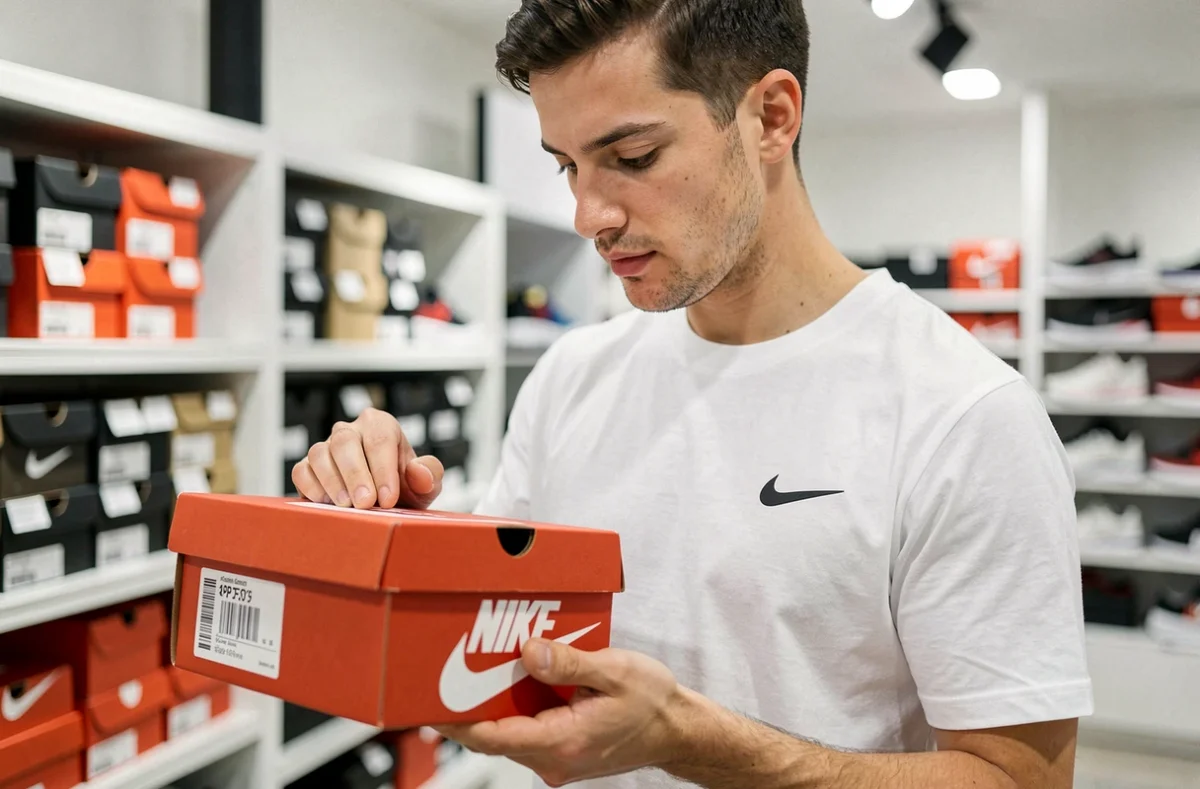
The UPC code (Universal Product Code) is a sequence of twelve digits associated with a barcode, assigned by the GS1 organization to identify a commercial product. On a pair of Nikes, this code appears on the inner label of the shoe and on the box. Before any purchase on the secondary market, cross-referencing this code with other elements of the label helps identify inconsistencies that signal a counterfeit.
GS1 Prefix of the Nike UPC Code: What It Really Indicates
A common mistake is to read the first digits of the UPC code to deduce the country of manufacture of the shoe. The GS1 prefix only indicates the national organization with which the company has registered its numbers. Nike, headquartered in the United States, uses prefixes assigned by GS1 US.
In practical terms, the prefix does not provide information about the place of production. A pair made in Vietnam or Indonesia will carry the same prefix as a pair assembled in China. Any claim that justifies authenticity by the “correspondence” between the prefix and the country of origin is based on a technical misunderstanding.
To reliably verify a Nike UPC code, the first step is to compare this code with the model number (SKU) and size indicated on the same label. A UPC code corresponds to a specific model/size pair. If the UPC code refers to a different model than the one advertised in the offer, the pair is suspicious.
UPC Verification for Nike: Why a Valid Code Does Not Prove Authenticity
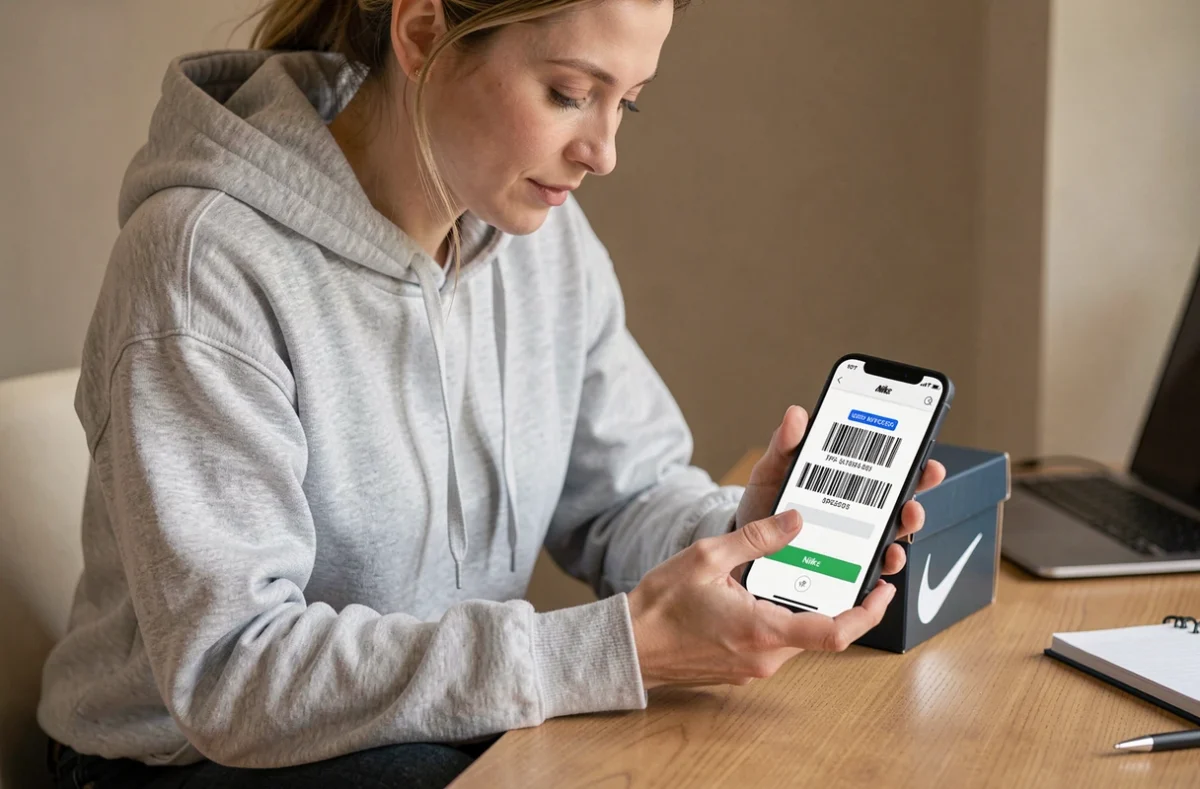
A UPC code is a public commercial identifier. It is enough to scan a legitimate pair to retrieve the sequence of twelve digits, then reprint it on the label of a counterfeit. A valid UPC code does not prove the authenticity of the pair; it only confirms that this code exists in a product database.
The distinction is fundamental. The UPC identifies a product (for example, a Nike Dunk Low Panda in size 42). It does not certify that the physical item you hold in your hand came from a factory authorized by Nike. A skilled counterfeiter systematically copies the correct UPC code for the correct model and size.
Verification by the check digit (the twelfth digit, calculated from the previous eleven according to a GS1 algorithm) helps detect input errors or invented codes. However, it does not detect an authentic code reproduced on a fake product. Testing the UPC check digit only eliminates the most blatant counterfeits, those where the counterfeiter typed a random number.
Cross-Referencing the UPC Code with the SKU and Nike Inner Label
The most useful checkpoint is not the UPC code in isolation, but the consistency between the different pieces of information on the label. On an authentic pair of Nikes, the inner label (located under the tongue or on the inner wall) simultaneously displays several data points:
- The SKU model number (style code), composed of letters and numbers, which identifies the exact colorway of the model
- The UPC/EAN code, which associates this SKU with a specific size
- The size indicated in multiple systems (US, UK, EUR, cm)
- The country of manufacture and the composition of materials
The method involves checking that the SKU printed on the label matches the model you think you are buying. This number is referenced on the Nike website and in sneaker databases. If the SKU refers to a different colorway or model, the pair is a counterfeit or a mismatched assembly of parts.
Then compare the UPC code with the SKU and size. A legitimate UPC points to this exact SKU in this exact size. Any discrepancy, even minor, is a serious warning sign.
QR Code and NFC Chip Nike: Real Reliability of These Technologies
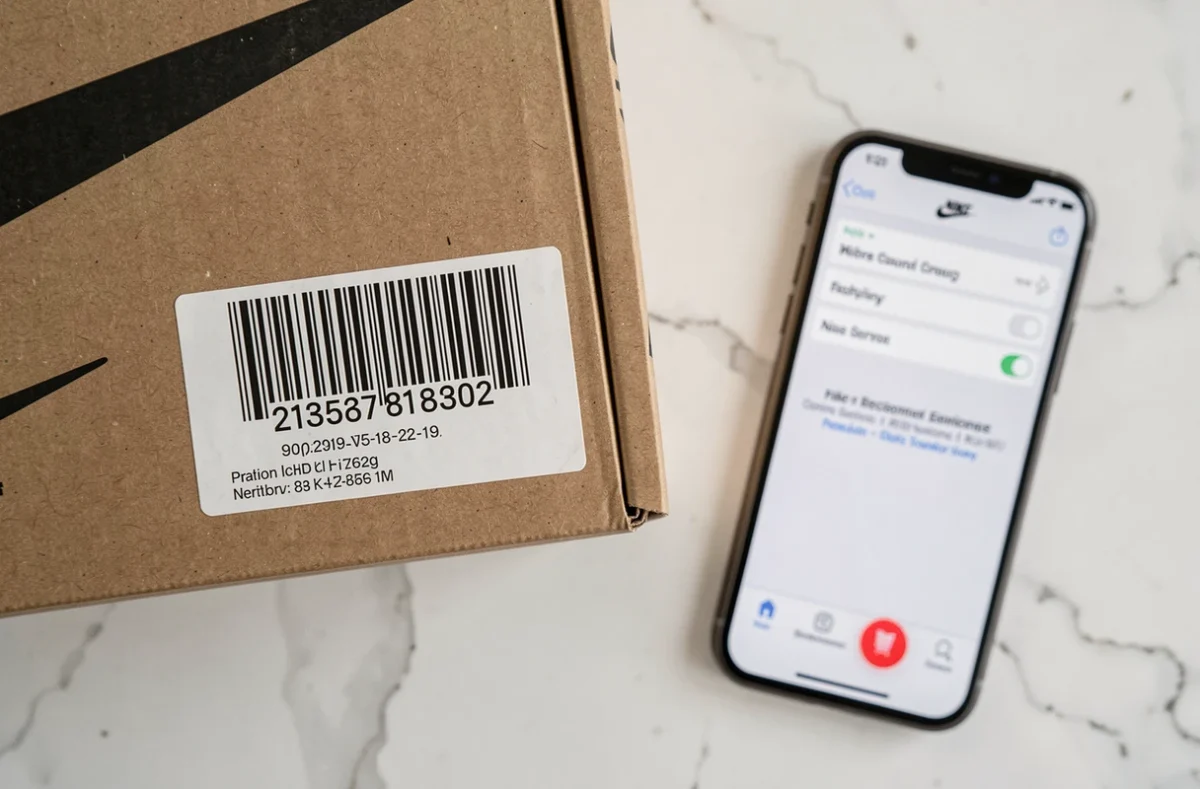
Some recent Nike models incorporate a QR code on the label, or even an NFC chip in the sole or tongue. These technologies are sometimes presented as guarantees of authenticity. The reality is more nuanced.
A QR code is an image. It can be photographed from a legitimate pair and reproduced identically on a counterfeit. A QR code alone does not constitute proof of authenticity.
It only becomes truly useful if it is linked to a unique identifier (specific to that particular item) and to a tracking platform that records scans. If the same QR code has been scanned hundreds of times from different locations, the platform may flag it as compromised.
For the NFC chip, the principle is similar. The NFC tag stores an identifier readable by a compatible smartphone. If this tag points to a Nike page confirming the model and size, it is a positive indicator, but not an absolute certification. NFC technology is harder to clone than a simple QR code, making it a more reliable indicator, though not infallible.
Physical Inspection Points to Cross-Reference with Nike Codes
Digital verification of codes does not replace physical examination. The two approaches complement each other. Here are the elements to inspect in parallel:
- The typography of the label: on an authentic pair, the characters are sharp, consistent, with no smudging or irregular spacing
- The alignment between the two shoes: the labels on the left and right shoes must be identical in font, size, and position
- The print quality of the barcode: the bars must be regular, scannable, and the barcode must match the UPC number printed below
- The glue and cutting of the label: a re-glued label or one with irregular edges suggests replacement
Inconsistency between digital data and physical examination is the most reliable signal. A pair with a correct UPC code but whose label typography differs from Nike standards is likely a counterfeit on which a legitimate code has been reproduced.
Authenticating a pair of Nikes relies on the accumulation of consistent clues, not on a single criterion. The UPC code is a useful initial filter to eliminate blatant fakes, but it is the overall consistency between codes, labels, materials, and finishes that allows for a definitive conclusion.