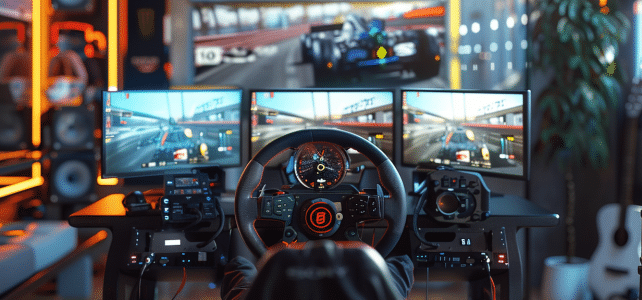
With the constant evolution of technology, Simracing has established itself as a demanding virtual discipline, blending a passion for motorsport with digital driving skills. However, excelling in this universe requires more than just dexterity and a good knowledge of the circuits. Gaming comfort is a key factor, often underestimated, that can significantly influence performance. From ergonomic adjustments to equipment choices, and optimizing the racing environment, virtual drivers are constantly seeking improvements that will allow them to cross the finish line with flying colors.
Optimizing the gaming space and equipment for driving comfort
The quest for the balance between comfort and performance revolves around the simracing position. This posture, unique to each driver, must result from meticulous adjustments of the gaming station. Dedicated sim racing seats, equipped with good lumbar support and adjustable features, are essential to avoid muscle tension that could hinder concentration and endurance during extended sessions.
Further reading : Tips and Practical Advice for All Your Home and Renovation Projects
The choice of the wheel is also crucial: brands like Thrustmaster or Fanatec offer high-quality peripherals, with precise force feedback, that significantly enhance immersion and driving accuracy. Don’t forget that the wheel stand must be stable and robust to withstand intense forces, especially during sudden maneuvers.
For the pedals, a pedal set like the Thrustmaster T-LCM offers a significant advantage thanks to its magnetic technology, which ensures better responsiveness and longevity. Adding a suitable stand for these pedals is a wise investment, allowing for a consistent and comfortable foot position, an often undervalued but critical aspect for managing acceleration and braking.
You may also like : How to Choose Your T-Shirt for Optimal Comfort During Your Workouts
The quality of the screen is fundamental. A clear and responsive display, with a high refresh rate, allows you to capture the details of the virtual environment with optimal clarity, thus reducing eye strain and providing better trajectory anticipation. Consider the value for money when making your choice, prioritizing a resolution and screen size that match your gaming space and viewing distance.
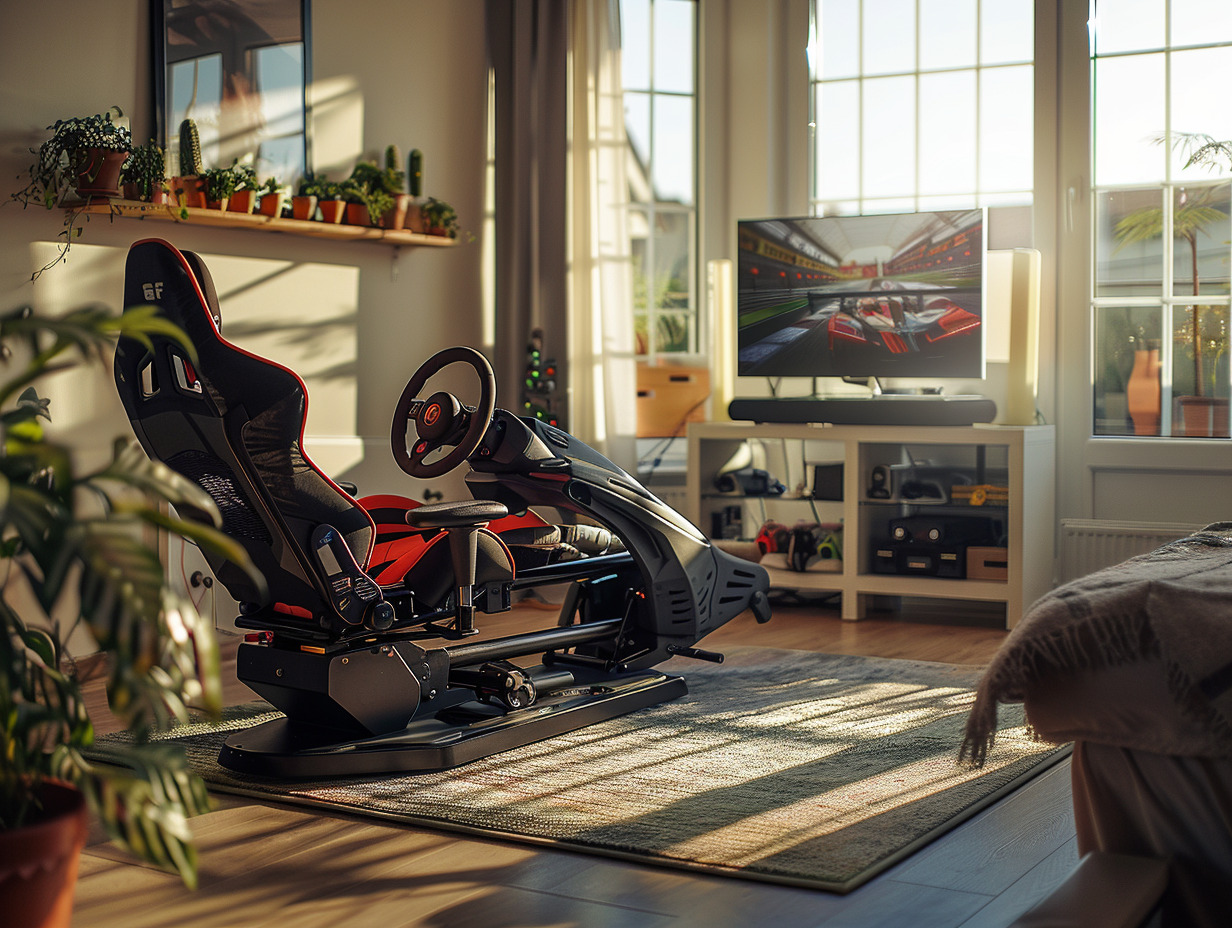
Driving techniques and habits to improve performance in simracing
For motorsport enthusiasts engaged in virtual driving, performance analysis is essential. Break down each driving session to identify trajectory errors and gaps in acceleration and braking management. Advanced telemetry tools are available to dissect your performance lap after lap, allowing you to visualize where and how improvements can be made.
Regular training is the foundation upon which continuous improvement rests. Establish a consistent training schedule, prioritizing quality over quantity. Sessions should focus on specific aspects of driving, such as threshold braking or mastering the phenomena of understeer and oversteer. Once honed, these techniques will enable you to navigate curves with optimized speed while maintaining precise control over your vehicle.
Don’t overlook the value of exchanging ideas with other drivers. Join simracing communities, participate in forums and discussion groups. The feedback from experiences and advice shared by more experienced drivers constitutes a valuable wealth of information. The ‘heel-toe’ technique, for example, may seem difficult to master, but with sound advice, it becomes a major asset for maintaining the car’s stability during downshifts while decelerating.