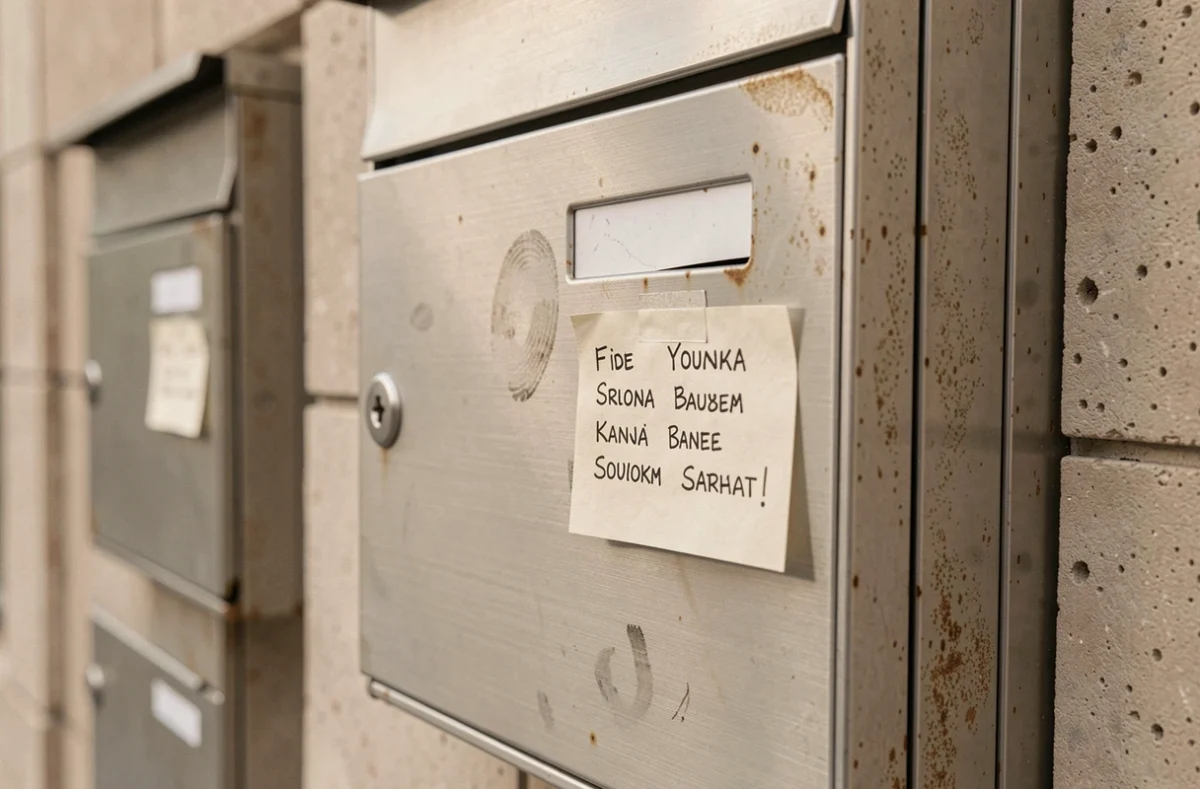
In a shared house, one mailbox receives mail for several occupants. If the label does not list every resident, the mail carrier may return a letter or put a parcel in the wrong compartment. This is about more than just appearance: it affects whether mail is delivered correctly, how departures are handled and, to a lesser extent, the protection of housemates’ personal data.
Multiple names on a shared mailbox: what the mail carrier needs
The priority is logistics, not aesthetics. A mail carrier delivers several hundred items on each route. If they cannot find a name on the mailbox, they follow the NPAI procedure (“No longer lives at the address given”) and return the mail.
Every housemate who may receive mail should therefore be named on the label. A collective name such as “Dupont Housemates” or just an apartment number is not enough to identify individual recipients.
La Poste specifies that a mail forwarding service arranged by one housemate does not automatically cover the others. If someone moves out, the remaining housemates should update the label to prevent the former resident’s mail from continuing to arrive—or, worse, their own mail from being returned by mistake.
For mail addressed to a former housemate, the recommendation is to write “NPAI” on the envelope without opening it and put it in a yellow postbox. Be careful not to confuse this with a simple delivery error: if the recipient still lives in the building but in a different apartment, marking the mail NPAI is inappropriate and only adds to the confusion.

Mailbox labels for shared housing: what information to include
Trying to get it just right can sometimes lead to an overcrowded label. First name, surname, phone number, floor, door code… None of these details are all necessary, and some raise privacy concerns. A name can identify someone directly or indirectly, so limiting the information to what is strictly necessary helps protect each housemate.
Here’s what to include on a functional mailbox label for shared housing:
- The surname of each current housemate, optionally followed by their first initial if there are similar names in the building
- The apartment number or floor, especially useful when the building has several similar mailboxes
- “c/o” if someone receives mail under a different name (for example, a spouse or a temporary subtenant under a mobility lease)
However, a phone number or email address does not belong on a label visible to everyone. A legible name and apartment number are enough for the mail carrier to deliver mail correctly.
Label size and material: what lasts
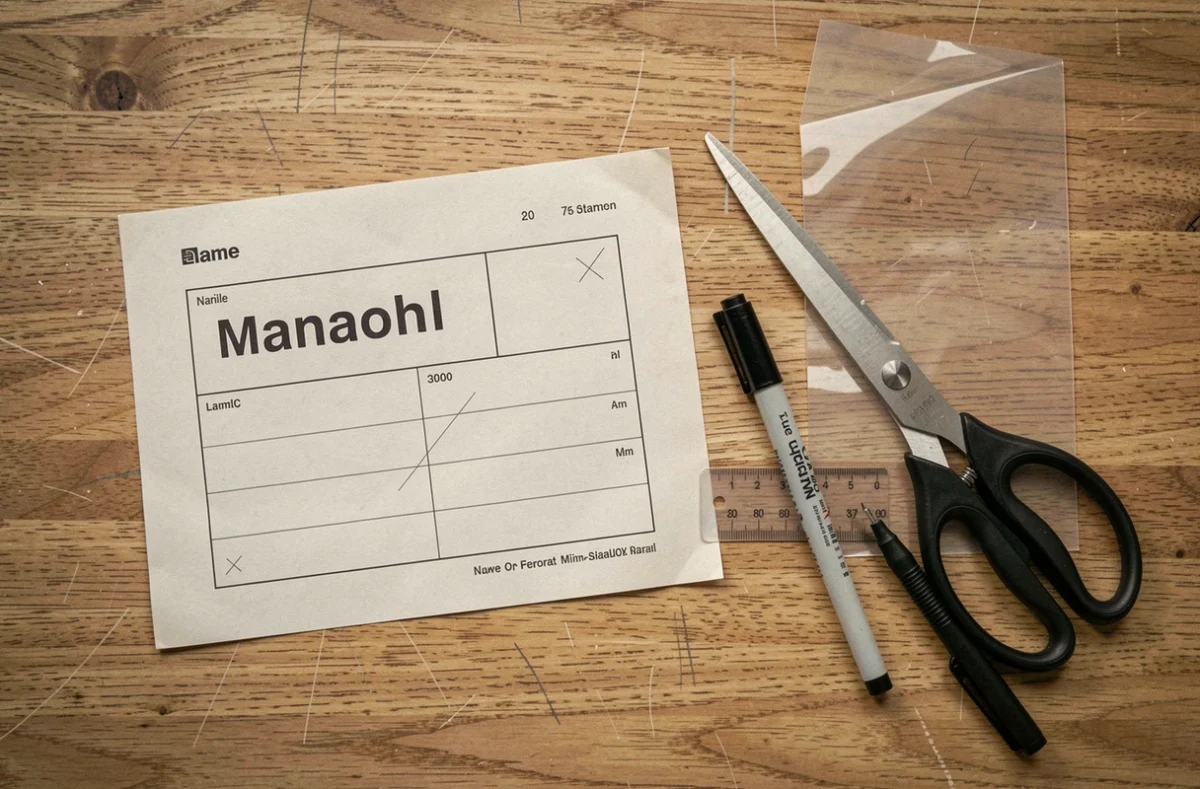
Most standard mailboxes have a label holder in a standard size, close to 100 x 25 mm. Some models, particularly in older buildings, can accommodate a slightly larger label. Measuring the existing holder before making anything saves you from having to trim or fold the label.
Printed paper or engraved plate
A sheet of paper slipped under a plastic cover is the quickest and least expensive option. In shared housing, where names change regularly, printed paper offers flexibility that engraving cannot. A home printer, basic word-processing software and sufficiently thick paper are all you need.
Laser engraving on acrylic PVC is more durable, but every name change means ordering a new plate. This option makes more sense for a property owner or a single tenant than for a shared house with frequent turnover.
Legibility: the requirement everyone underestimates
The mail carrier reads the label while standing, sometimes in a poorly lit lobby. A few simple rules can make it easier to read:
- Use a sans-serif font (such as Arial or Helvetica) in a size large enough to read at arm’s length
- Use uppercase for surnames and lowercase for the rest to create an immediate visual contrast
- Use a light background with dark text, or vice versa, but avoid low-contrast combinations (gray on white, yellow on cream)
- Keep the text to no more than three or four lines: beyond that, the characters get smaller and the label becomes difficult to read
Three to four names is the practical limit for a standard label. If there are more residents, decide how to fit the names before thinking about the design.
Updating the label when a housemate moves out
This is a recurring weak point with shared mailboxes. A housemate moves out, nobody updates the label, and the new arrival’s mail goes missing for weeks. The problem is especially common because shared tenancy agreements often have staggered move-in and move-out dates.
Assigning one housemate to take responsibility—perhaps the person who manages the keys or contacts the landlord—makes it easier to keep the label up to date. It only takes a few minutes: print a new label, cut it to size and slip it into the holder.
If the former housemate has not arranged mail forwarding with La Poste, their mail will continue to arrive until senders have been notified. The only thing you can do at the mailbox is remove their name from the label and handle any remaining mail as NPAI, as described above.
An up-to-date label cannot guarantee that every item will be delivered correctly, but it greatly reduces unnecessary returns and misplaced parcels. In a shared house with frequent turnover, keeping a few blank, pre-formatted labels on hand makes each transition easier.