Standard drywall cannot support a load greater than 30 kg without specific reinforcement, but some models of anchors claim to exceed this limit. Poorly adapted fixings regularly lead to furniture falls, sometimes several months after installation. The regulations on integrated kitchens do not specify any universal method for securing wall cabinets to a drywall partition.
Alternative solutions exist, combining suitable anchors and internal reinforcements to prevent tearing. Compatibility between the wall structure, the type of furniture, and the choice of anchor remains crucial to ensure long-term safety.
Why securing a heavy piece of furniture to drywall requires special attention
Drywall, in other words, a plasterboard screwed onto a metal frame, is a standard in most modern kitchens. However, this structural lightness inevitably raises doubts whenever one considers hanging a kitchen wall cabinet. Plaster, being brittle by nature, does not resist tension well. As soon as a wall cabinet fills up with dishes, jars, or appliances, it quickly approaches the support limit, especially if the fixing is inadequate.
The weight of the furniture often rests on only a few anchor points. Unlike a load-bearing wall, drywall deforms under load, which can cause cracks, tearing, or even the complete fall of the furniture. The installation at height, above the work surface, adds to the stress: gravity weighs on every weak link in the system. To prevent domestic accidents, it is essential to distribute the load wisely and select anchors specifically suited for plasterboard.
Securing a kitchen wall cabinet to a drywall partition requires a thorough analysis: type of wall, location, quality of anchors, nature of the furniture, everything must be scrutinized. Placement of metal studs, level checking, estimation of the total weight to be supported: technical rigor leaves no room for approximation and conditions the reliability of the installation over the long term.
What solutions for a truly solid fixing on a drywall partition?
To ensure the proper holding of a kitchen wall cabinet on a drywall, caution is required at every step. The fragility of the plasterboard excludes any hasty DIY: each fixing must be considered based on the load, the type of wall, and the content to be suspended.
Here are the main options that have proven effective among experienced DIYers:
- Metal expansion anchors (Molly type): their expansion behind the board distributes the force over a wide area, drastically reducing the risk of tearing.
- Toggle bolts: thanks to their deployed wing behind the partition, they provide reliable anchoring even without accessible studs.
- Direct screwing into the metal studs: once detected, this guarantees superior holding.
- Mounting rail or wooden cleat: fixed across the entire width of the furniture, it distributes the weight and relieves each anchor.
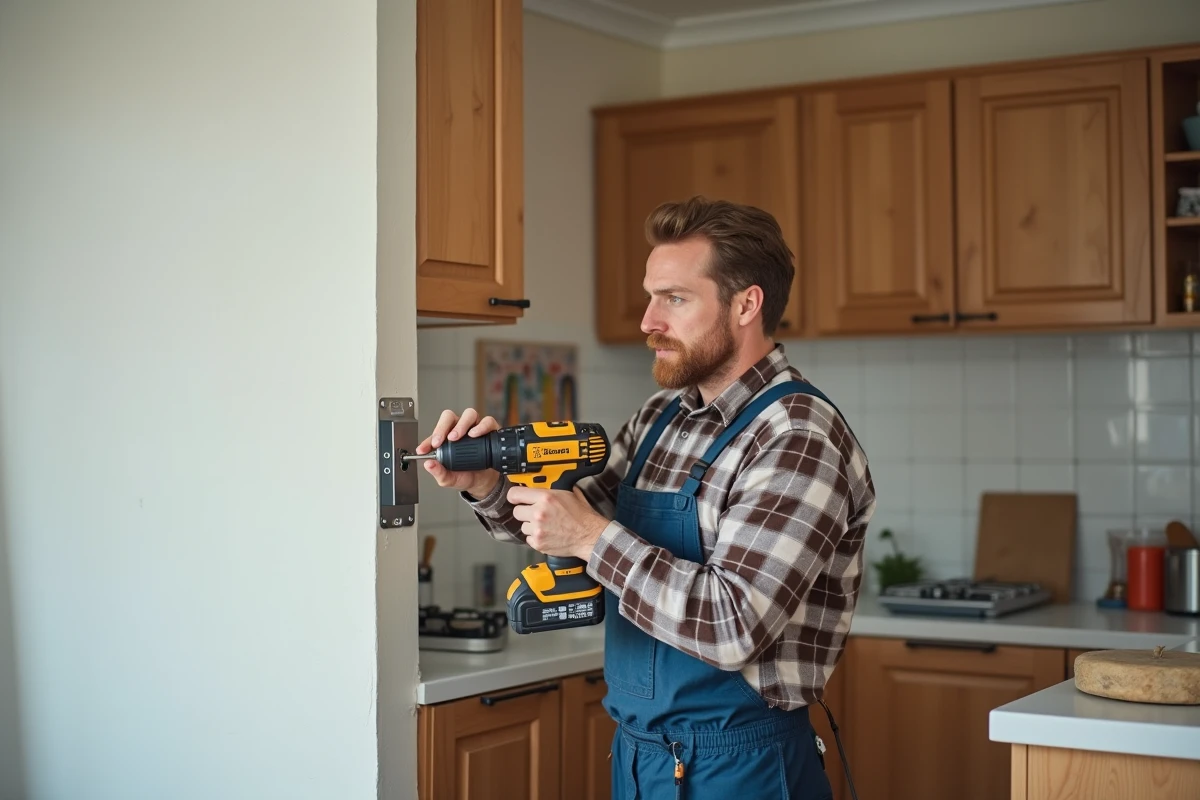
The choice of anchor diameter is crucial: it must match the thickness of the drywall and the weight of the furniture. A suitable drilling tool, slow speed, precise depth control, and thorough cleaning of each hole are essential. Alignment, checked with a level, ensures lasting stability, which is vital in a room subjected to frequent handling.
Common mistakes and pro tips for securely installing your fixture
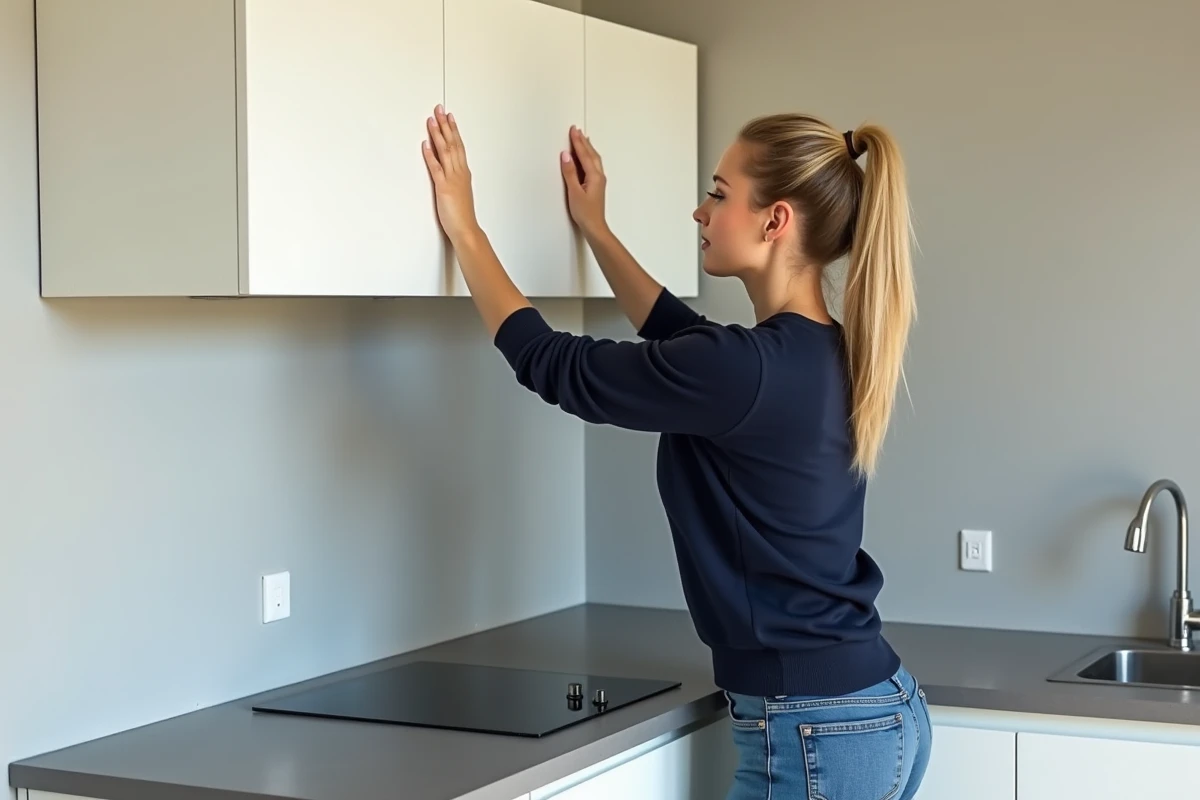
Hanging a kitchen wall cabinet on drywall does not allow for approximation. The most common pitfall? Underestimating the weight distribution. Multiply the fixing points and, if possible, align them with the studs of the wall. A cabinet suspended on a single anchor, even a very robust one, often ends up giving way under the accumulated weight over time.
Using inappropriate tools compromises the solidity of the installation. For each step, rely on:
- A drill set for plaster;
- A level to ensure horizontal alignment;
- A tape measure to precisely prepare the location of the fixings;
- A clear marking with a pencil or marker before drilling.
Also, remember to protect the work surface or floor with a tarpaulin or cardboard to avoid scratches and facilitate cleaning. A stable step ladder will allow you to work at the right height without straining or rushing.
After installation, periodically check the fixing of the wall cabinet. Occasionally tightening the screws prevents any play that could develop, especially in heavily used kitchens. These simple yet rigorous actions ensure a reliable and durable installation. Securing a wall cabinet to drywall is not just a matter of technique: it is primarily a matter of vigilance and demand. Nothing is more reassuring than knowing everything is secure, even years later.